Mitsubishi Transfer Case to Tera Low231 NP231 ...


(jump to pictures)

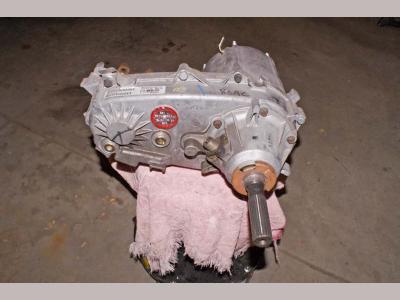
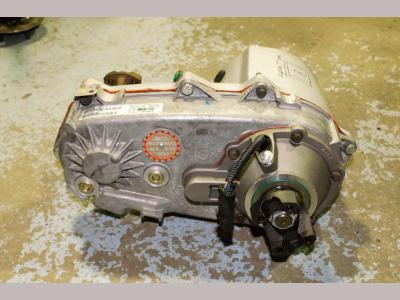
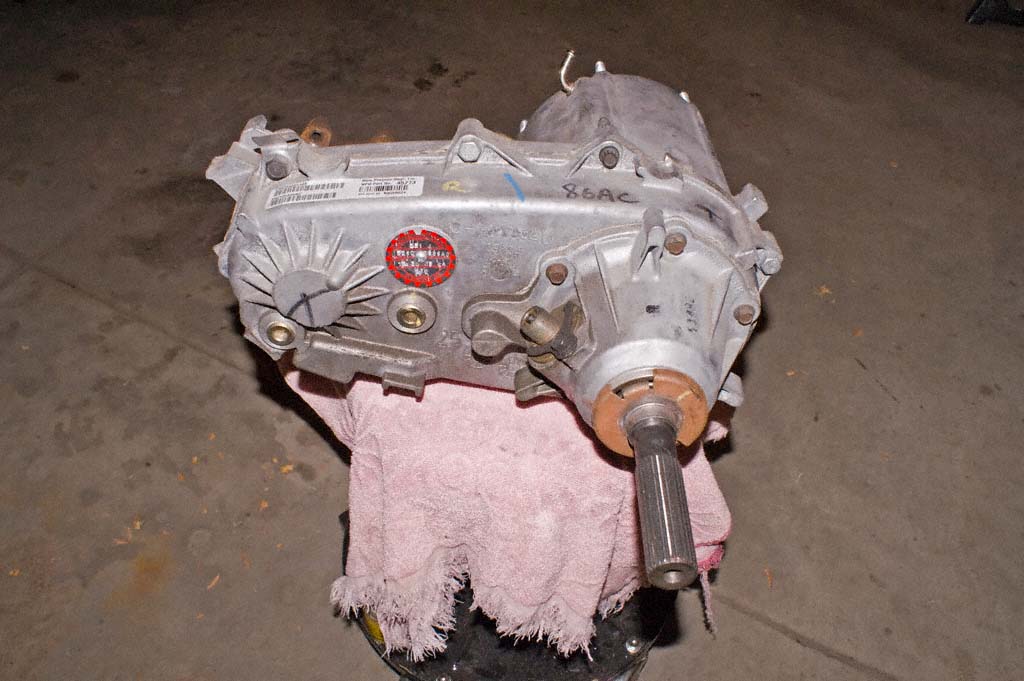
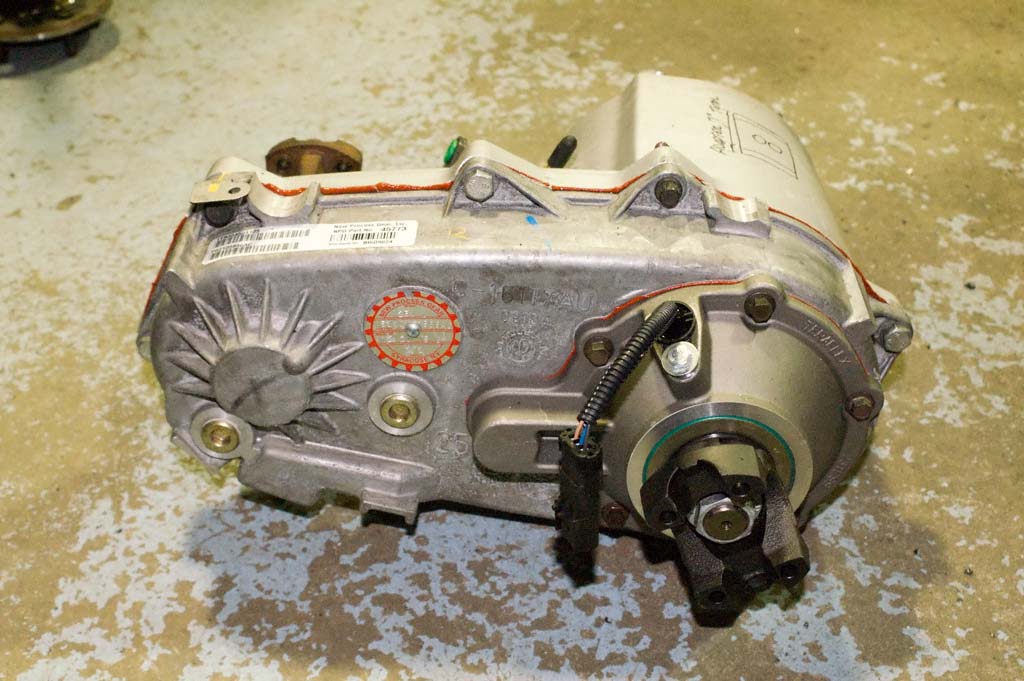
If you're asking yourself what exactly does this mean in English then you probably don't care about any of this. And, most people don't need to care about this. However, for those of us who curse Mitsubishi's 1.92:1 transfer case ratio on a regular basis this is a big deal. What this translates to in English is simply this: We're not stuck with a transfer case with silly tall gearing. Now there's an option. Actually, now there are several options but I'm getting a head of myself. For my application I chose the NP231J transfer case because there are thousands of them out there, they're cheap, and there's great aftermarket and stock support for parts; also, because I found one out of a 2006 Jeep Wrangler Unlimited with less than 140 miles on it for dirt cheap!:-)
TeraFlex makes the Low231 4.0:1 kit as well as the short SYE and ultra-short SYE kits. Several other companies make short and utra-short SYE kits as well. In my opinion, the really nice part about the NP231 is the availability of replacment parts from common autoparts stores like Napa, Checkers, AutoZone, Carquest, etc. If something in my t-case breaks in southern Utah I want to be able to fix it right there immediately. That's impossible if it's a Mitsubishi part. Especially if it's a transfer case and it gets even worse since my t-case is the 5-speed manual transmission transfer case, of which apparently there are only, like, five in existance.:-( Asside from all that, even if parts are available in stock which they aren't, the closest dealership to Moab is Salt Lake City or Denver. Yea! Can you say $2000 tow bill?
So, I finally sat down and worked out the engineering details of a transmission to transfer case adapter, the shift mechanism, and drive shafts. The plan is to build an adapter that is longer than the existing spacer and has the existing stock transmission and transfercase levers built into the adapter rather than the top of the transfer case. Then have a transmission output shaft to t-case input built. Take the existing transfer case out, swap the new one in and hook up a cable to shift the new transfer case using the existing t-case shifter. This may sound like a lot of work but so far it's been less work than getting gears from AU. And, rather than the 2.85:1 t-case gears I'll have 4:1. I'm just getting started on this but I'll keep updating this as it goes along.

Update: February 8, 2008 I admit it. I sissy'd out. I got lazy and decided to not use the stock transfer case shifter. It was going to take a little extra machine work and some time with a calculator and after hearing about Mitsu stopping production on manual transmission related parts I decided to just do away with the factory shifter. I stopped by On-Trac Performance here in Denver and they sorted through their manuals until they found a company in California that sells push-pull cable shifters. They sell the shifters in sort of a 'build it to suit' way, so I picked out the configuration, handle and a couple other things I wanted and they should have me a price by Monday. OK. So, maybe I only kind of sissy'd out.:-)

While searching for cable shifters, I found out that the Jeep Liberty uses a cable shifter on their NP231J transfer cases. Unfortunately, like the rest of the Liberty, the build quality is pretty, well, uh, how to put this in a politically correct way? Hmmm. Cheesy? Pathetic? Yea, something like that. IMHO, build your own if you want a cable shifter.

I picked up the aluminum for the face plates (that's the big silver rectangle picture). 6061 T6 12"x24"x1". At $45 a foot it's not cheap but that's enough to do the face plates, the shifter mount and the cross member mount with a little left over for miscellaneous. Unfortunately, I think 1/2" is too thin and I couldn.t get 3/4", so.... Betcha they won't break!:-)

I ordered the Dakota Digital SGI-5 'Universal Speedometer Signal Interface' Thursday night from Summit Racing. Many thanks to NathanC from the Mitsubishi 4x4Wire Forum for figuring this one out in advance, and for all his other help!!

The new NP231 is done and at the machine shop with the TeraFlex ultra-short SYE and Tera Low231 4:1 kits installed. Looks nice, but it'd look a LOT nicer if it were already installed! Sigh. Can't get impatient!!!:-)

Did a ton of surfing and spoke to several places here in Denver regarding drive shafts. I think Tom Wood's Driveshaft's will be the solution for the back and probably the front, too. I'm very impressed with what I've seen of their stuff and the back driveshaft on my Sport will take a lot of abuse. I don't want to be reengineering the drive train in a year. I was also impressed with the design of the new Bigelow/Cornay CV joint. I've never been a fan of the 'standard' Spicer CV joints. Not because they don't work, because they do, but because it's not a very efficient design. Any vibration anywhere in the drive train means a loss of power at the tires which directly translates into lower gas mileage and with gas prices in the $3-$4 a gallon range that can get expensive very quickly. Unfortunately, the Bigelow/Cornay joint isn't available yet but after speaking to someone that's testing them on a Dodge 3000 I'm hoping they'll let me be a guinea pig and test one or three out on my Sport in a couple weeks. Anyway, they're an interesting concept. I highly recommend checking them out on Tom Wood's Driveshaft under the 'Bigelow 40 Degree CV' link.

So, everything is pretty much worked out. I still need a cable but I won't order that until the shifter is here. Otherwise, the shop is starting work on the adapter so it shouldn't be too long before I have something tangible.

Below is a link to all the pictures I have so far. The Jeep NP231J before the TeraFlex ultra-short SYE and Tera Low231 4:1 kit were installed and after. Pictures of the V5MT1 transmission and transfer case from my 1997 Montero Sport, and pictures of the factory 5-speed tail shaft housing/adapter. I found two diagrams of the V5MT1 and a picture of the Dakota Digital SGI-5. And, a picture of a giant hunk of aluminum that will be used for the new adapter mounts.

For those interested in other than a NP231 here is an excerpt from the Tera Low231 4:1 installation guide...

"The Tera Low231 will fit only NP231 (231J) transfer cases. With NP241, 242, 245, 249 and NV247 modifications to the factory case can be made by arrangement with Tera Manufacturing."

UPDATE: February 21, 2008 I finally received the Dakota Digital SGI-5 for the speedo conversion in the mail from Summit Racing. You can get them directly from Dakota but they were the same price and I like to support Summit when I can. We've done a lot of business with them in race parts for a long time.

I forgot to get the name of the company in CA that produces the shifter. They actually have a couple different ones. I picked this one because I'm mounting it above the stock t-case shifter location and I need something that didn't stick down into the tunnel too far. I also didn't get a handle with the controller since I'm going to cannibalize the stock t-case shifter and stick it on the new controller. This controller has 3" travel and a 100" lb. rating which is plenty for the NP231. Be a good shifter for a Stak or Atlas if you wanted to mount them side by side. The controller is only about 1.25" wide. I also got this one because it has a clutch which is supposed to lock it in place. I'm hoping that will keep certain passengers from knocking the t-case out of gear. (don't ask, you don't want to know)

I also decided 'just for the hell of it' to go NathanC's, from 4x4Wire's Mitsubishi forum, route and use my spare NP231 parts for a Box4Rocks doubler. Hey, I'm recycling! That's good, isn't it?? Got to rationalize this somehow, I guess. Buddy of mine says 230:1 is an IQ test and I failed. :-)

I spoke to Duffy, the maker of Box4Rocks, today for about 30 minutes. Nathan's right. Seems like a pretty decent guy and he does know his work. Pirate 4x4 has a LONG thread on the product.

http://www.pirate4x4.com/forum/showthread.php?t=451754&highlight=box4rocks

Duffy told me that right now he has more than 600 units out - I was surprised there were that many - and more than a couple with 40-50K on the kit. I've spent the last several days trying to find even one complaint about the Box4Rocks and couldn't.

I ran across this today on Pirate 4x4 right after talking to Duffy. The 'install for idiots' guide which really lets you see what this is.

http://www.pirate4x4.com/forum/showthread.php?t=577021&highlight=box4rocks

Anyway, I don't plan on using the doubler all that often - figure it ought to make the Golden Crack and one or two other trails a bit less bouncy - but, since I'm building everything out anyway and I don't want to have to replace my brand new drive shafts anytime soon I figure I might as well do it now.

Update: March 17, 2008 OK. The doubler kit from D&D Machine is in along with the shifter and cable for the doubler. All the misc cable ends are collected. I found that Ace Hardware carries what they call a 'throttle cable end' which is essentially the same as California Push-Pull's 'rod end bearing' so I picked up two of those as well as the fittings for the doubler 'sight tube'. So far I'm pretty impressed with Tuthill's Unidrum shifter. Seems to be built very well and it's exactly what I was looking for to shift the doubler. Since I plan on mounting the doubler shifter on the side of the tunnel down and in front of the driver's seat I was looking for a way to run the cable through the tunnel sheet metal and then seal everything. While surfing for NP231 information I stumbled across the clutch push rod boot for the old Jeep CJ. It's angled perfectly and the hole is almost EXACTLY the diamter of the cable. I plan on putting one boot on the inside of the cab and one on the other side of the tunnel and run the cable through both.

The adapter is coming along nicely. Slowly, but nicely. Both end plates are done and and ready to be mounted to the center section. I settled on 6" diameter, .5" wall T6 pipe for the center section. After measuring things some more I found out that the OD of the pipe fit nicely inside the NP231's studs with just a tiny bit of recessing to get a socket to clear.

I droped the CAD drawing off at the shop for the transfer case mount today. It took a while but I finally found a shop here in Denver that can laser cut 3/16" and 1/4" plate. After a lot of surfing and not coming up with much in the way of ideas for the second transfer case support I thought of just sandwiching a 3/16" plate between the two t-cases and sticking a foot on it for a transmission mount. I ran the idea past a couple people and then talked to Duffy at D&D Machine about it. Since I'm running the Tera Low231 with a longer snout than the 2006 NP231J input the consensus is that adding the 3/16 plate between the two t-cases wasn't going to decrease the strength any measurable amount. I also picked up the Jeep TJ transmission mount I plan to use. Some probably useless trivia I ran across regarding the NP231 and NP241. Apparently, the planetary gear set from the NP241 can be swaped into the NP231. Why you ask, would you want to do this? The NP231J planetary set only has 3 planetary gears where the NP241 has 6. So, theoretically, the NP241 is stronger. Never having met or heard of anyone that's blown the planetary gears out of either t-case I can't say. The swap does require the correct hi-lo shift fork and hub, in additon to the planetary gear set.

I still have to get the drawing for the Tera Low231 t-case cable mount bracket, the two redesigned t-case shift levers and the Tera Low231 console shifter mount plate finished and off to the shop. I hope to drop those off by Wednesday. Unlikely I'll get this together before the end of April but I'm keeping my fingers crossed.:-)

See the "Box4Rocks doubler..." link below for new pictures of the doubler, the TJ transmission mount and the CJ clutch push-rod boot. You can see the brass fittings for the sight tube on the back of the doubler. I also added pictures of the two shifters and cables. The picture of the shifter with the red-orange handle is for the doubler and the picture of the cable and shifter without a handle is for the Tera Low231 t-case. When I do the swap I'll snip off the end of the original transfer case lever and weld it to a plate that bolts to the new cable shifter. Also visable on both shifter cables are the rubber accordian boots. I decided to add those as added protection from the really fine crud you find in Moab. These cables are not something you want to have to replace every couple years and the boots were less than $5 each.

Update: March 27, 2008 I finally got the 4340 steel ordered from McMaster-Carr. Unfortunately, it's not heat treated. McMaster-Carr states it's Rockwell 20 and the shaft will need to be 38-42 Rockwell. Fortunately, there is a place up the street that does heat treating for a reasonable price. I finally gave up trying to get 4340 HT after about two dozen fruitless phone calls to every steel outlet and manufacture I could find. The adapter is coming along well and I managed to get started on the doubler case last weekend. I sniped the end of the t-case off and I've almost got the block off plate fitted. I'm sure that will be done and ready for welding by next Monday.

I have sent off just about all the CAD diagrams. I've already sent the CAD drawings off for the Tera Low231 shift cable bracket and transfer case support and got the pieces back. I'm still waiting for the t-case shift levers, and the bulkhead shifter cable bracket and a lengthened version of the Tera Low231 shifter pivot. I started to do some mock-ups and realized the original pivot will be a little too short once the shifter is mounted on the tunnel. Also, lengthening the pivot will shorten the throw on the shift lever a little which isn't shuch a bad thing. I've added some more pictures below of the 3/4 finished doubler, unfinished transfer case support and Low231 shift cable bracket. There's also some pictures of the inside of the doubler.

Update: March 31, 2008 This weekend I finished fitting the block off plate for the doubler. Not a particularly complicated process but time consuming. The doubler goes to the shop Monday to get the block off plate welded in. I decided to leave the block off plate about 1/32 of an inch taller than the case so they can surface it down flush with the case half. The last thing I want to deal with are leaks after everything is assembled.

The 4340 steel from McMaster-Carr for the transmission to transfer case shaft showed up on Friday and I dropped it off at the machine shop on Saturday. I was impressed with the speedy delivery considering it was shipped ground form Illinois.

I also finished countersinking the three bolt holes in the doubler adapter plate. The support plate shown in the pictures wouldn't clear the bolt heads of the two lower bolts in the adapter plate and the bolt for the shift rod so I picked up a 1/2" and a 1" 90 degree countersink bit and three new hardened bolts from the hardware store. And, NEXT time I'll check the bolts BEFORE I buy them. I didn't think to check whether the adapter plate bolts were metric or not so of course I bought the wrong ones and had to make a second trip. The case bolts for my NP231 are metric.

The machine shop is ready to start on the shaft from the transmission to the doubler. That should be interesting. They're going to use an EDM machine to cut the splines for the end that fits the transmission output shaft. I'll have to get some pictures of the electrode once it's cut. I've never seen an EDM in action in person so this should be educational.:-)

A note for anyone wondering about the transfer case support and sandwiching it in between the doubler and the t-case. I came up with this idea after looking at several ideas tossed around on Pirate 4x4 and a few other forums. I wasn't real tickled with the idea of using the lower bolts of the doubler or t-case to attach a plate to especially since I couldn't find a way to use more than three bolts. That seemed like a lot of stress on the case half. I also couldn't figure out a good way to make the support clock-able. That was the big issue I had with all the other setups I found. If you later found you needed or wanted to re-clock the doubler or t-case you'd have to fab up a new mount. I have long since reached the point where I'm not interested in re-creating the wheel more than once.

So, after a little thought and a call to Duffy at D&D Machine, the maker of the Box4Rocks doubler, I decided to sandwich a plate between the doubler plate and the doubler clocking ring and then weld a foot on the bottom of the plate for a Jeep TJ transmission mount. The plate is cut with the same bolt pattern as the doubler plate so I can actually clock the support independently of the doubler and transfer case. The only drawback to this support design is it introduces another 3/16" between the doubler and transfer case. I wouldn't recommend this if the transfer case has the short input snout but since I'm using the Tera Low231 with the long snout I'll still have more spline contact area than if I were using the short snout transfer case without the plate. As I understand it, it's possible to swap the NP241 parts into the NP231 to get the longer snout or start with an NP231 with the longer snout in the first place. Either way it's not an issue for my setup and I'm not really worried about the loss of contact area given how little power is going to be going into it from the Mitsu 3.0L and the fact that I don't abuse the throttle when 'wheeling.

Update: April 28, 2008 The doubler is finished and ready to bolt in. Its now sitting at the shop with the Terra Low231 t-case so I can do mock ups to make sure everything fits correctly and also to help make sure I don't forget something critical. There wasn't much of interest in getting the block off plate welded in. I had the machine shop surface the entire case half to help insure there are no leaks. It wasn't horrible - not off by more than 30 thousandths. I did take the time (I was bored) to have the shop weld up the two center divots (stops) in the doubler shifter mechanism - 4HI and N - and then I ground the weld down and polished it up nice. I figured that there wasn't much of a point to having stops in the shift sequence for something that doesn't exist anymore. Besides, if someone else has to drive it'll be a little less confusing.

The adapter shaft is moving along. The shop cleaned it up and drilled the center hole for the female end. I'm waiting for them to cut the electrode so they can stick everything in the EDM and cut the female splines. Hopefully that'll happen tomorrow or Wednesday.

They finished cutting and welding the last revision of the transfer case support bracket Friday. I hope. I test fit everything and this time it appears I got all my measurements correct and didn't forget anything. You can see the support mounted to the doubler plate in the picture following the mockup of the new adapter. I counter sunk the lower bolt anyway just so I wouldn't have to make the slot any larger than necessary. It's probably more than I need or will ever use but the slot gives me enough room to rotate the doubler a good amount if necessary. I doubt I'll have to mess with the doubler at all but the plan is to get EVERYTHING completely done and run through several mock ups before actually hauling it all to the garage and swapping things around. I want to make sure that if any adjustments are necessary they can be made right then and there and not require modifications or return trip(s) to the machine shop or anywhere else.

For those wondering: The slightly covered counter sunk hole to the mid left is the bolt for the shift assembly shaft. That's bolted in before it all goes together so there's no problem with it being covered up by the support. The slightly covered counter sunk hole to the mid right is another story. I don't know how much I will need to shift things - if at all - and I figured rather than guess and remove metal where I don't really want to remove metal I'd leave that as an 'on the spot' modification. Once I'm sure things are set I'll take my RotoZip and snip out a little bit to clear the alan head wrench or the whole bolt if necessary. Same goes for the lower drain plug at the lower left.

The Terra Low231 shifter mount plate for the tunnel and the cable mount bracket are both due to be picked up this week. All I have left is the cable mount bracket for the doubler. I've been kind of holding off on that until the adapter is closer to completion. I'll probably get that drawn up this week and off to the laser cutting shop by Monday. That's the last piece and then everything goes to get treated so it doesn't rust.

I put everything together this week to get an idea of what goes were, etc. Looks good but the length is pretty intimidating. I don't think the guy doing the adapter is at all convinced that it'll actually fit in my Sport. :-) You can see the cleaned up welded in block off plate on the doubler. Nothing real fancy there. I'm still toying with installing a drain plug - a la NathanC. :-) I'm not quite sure the plug will clear the drive shaft yet. You can also see the redesigned shortened shift arm bolted to the doubler. It's shown in 4LO. 2WD would be back towards the case (down in the picture) . I left 1/4" of clearance between the lever and the housing so I ended up with about 2" of travel in the lever. Figured decreasing the angles the cable cycled through would cut down on wear and tear on the cable.

So, from top to bottom in the two mock up pictures - 5-speed transmission tail shaft housing, new adapter, doubler, transfer case/doubler support and Terra Low231 transfer case. It's hard to believe that the entire assembly is only about 9" longer than the stock transfer case.

I did find out something interesting the other day regarding the electronic version of the 4WD indicator switch on the NP231. The plug is a standard WeatherPak two prong male plug. Nice! I picked up two for about 5 bucks from a local speed shop. MUCH better than the $37 dollars EACH Jeep wanted to charge!

So, if I get around to it I'll order the rear drive shaft. Probably that will have to wait until next Monday. End of the month is busy at work so I doubt I'll have time until Saturday to measure for the length.

Update: June 30, 2008 Well, the doubler WAS finished until I decided to put in a drain plug.:-) I couldn't find a really low profile drain plug with a good magnet and an o-ring anywhere so I ordered a 'replacement' for the bottom plug on my new ARB differential covers. That should work perfectly. Now, I just have to find my 18x1.5mm tap....:-)

The 'stub' shaft the goes between the transmission and doubler is pretty much finished. That came back from the heat treaters last week. The heat treaters used a salt bath and hardened it to about 41-42 Rockwell. The same hardness as the shaft that comes in the doubler kit from D&D Machine. We intentionally left it about 1/4" or so long so that once the adapter is assembled - hopefully this week - we can cut the shaft down to the optimum length. I'm still toying with the idea of turning the main section down a 1/16 or so to reduce the overall weight of the shaft a bit more, but I haven't decided yet.

The adapter piece is to the point of being assembled. Unfortunately, everyone has been swamped the last couple weeks and I was in Moab for a week so basically nothing progressed. I did finally remember to bring the locating dowel for the adapter to the tailshaft housing last Saturday. That was the last outstanding missing part that the shop needed to finish the project. I think.:-)

After spending a week in Moab and the surounding area with a half dead t-case I'm more than ready for this project to be finished.

Update: November 3, 2008 Let's see. What have we done in the last four months.... We're about 98% finished with the adapter. We did a complete bolt-together mock-up of the doubler, tail-shaft housing and adapter last week. That went very well. We've also bolted the transmission, tail-shaft housing and adapter together with the shift dogs installed on the rails to make sure everything clears. Good thing, too. The reverse/5th gear dog when shifted into 5th comes back and there isn't enough room to clear the adapter stub shaft. Thankfully, the stub shaft doesn't need to go any further than shown in the pictures for adequate spline engagement.

We added a drain-back hole in the adapter so any fluid that gets trapped in the adapter can flow back to the tail-shaft housing. We also added a drain plug to the adapter so that any fluid can be drained out of the adapter prior to disassembly. The first time I disassembled the stock transfer case and transmission I didn't realize that fluid gets that far back and ended up dumping about half a quart of synthetic gear lube on my head. Too much fun.

We drilled the doubler shift bracket mount holes so that's finished. Now I can draw up the last bracket. We still need to add the drain plug to the doubler but that can be done pretty much any time in the next week. If I get time I'll figure out where that needs to go and get them to drill and tap the hole.

Everything is now tack welded together in preparation for final welding. Once that's done we'll do a complete mock-up of the transmission, tail-shaft housing, new adapter and doubler to get the final length of the stub shaft. Once all the excess plate is trimmed away the machine shop will be finished. All that will be left is to get it anodized to protect the aluminum from the elements and de-icer in the winter.


INSTALLATION TIME! Finally!!!

Update: March 5, 2009 It's been a while since the last update. This hasn't been a real time consuming or complicated project. Its just taken some time for everyone to get their parts completed.

It's finally time to install everything! I striped out the old transfer case and installed the new adapter, doubler and transfer case assembly. I had a flat bed haul it to Four to Go here in Wheatridge where they built the cross member and installed the a new rear, CV style slip drive shaft from Front Range Driveline.

Driveable again, I took it back to the garage and spent a few hours wiring in the speedometer using the Dakota Digital SGI-5 speedometer adapter and 2WD/4WD switches and running the doubler and transfer case vent lines up inside the engine bay above the water line.

The assembly so far has been pretty painless and incident free. A transmission jack is a MUST for this project. Trying to manage the doubler/transfer case assembly even with a jack is awkward. That is a LONG assembly!

So far, the worst problem I've run into is a leak at the adapter drain plug. I need to either get a better drain plug or a different gasket for the existing drain plug.

All the wiring is installed. The Jeep pulse generator mated up with the Mitsubishi speedometer using the Dakota Digital SGI-5 C adapter without a hitch. OK, without a hitch once I figured out that the Jeep pulse generator requires that the SGI-5 dip switch 1 be set to the ON position.

The SGI-5 documentation is pretty good and combined with the few write-ups available on the Web I was able to put together a wiring diagram that would work for me. Some notes (besides dip switch 1):
Everything I read stressed that the SGI-5 should be wired into the same circuits as the speed sensor. Since the Mitsubishi power lead (B-W) supplies 12V DC I taped it to provide power for the SGI-5.
Even more stress was placed on making sure that the SGI-5 was on the same ground plane as the pulse generator. I taped into the Mitsubishi ground lead (B) to supply ground to the SGI-5. Since this is the 'Sensor Ground' the wire is run to 'Sensor Ground' on the SGI-5 - NOT 'Ground'.
For some reason Output 3 caused the speedometer needle to jump slightly every once in a while. The documentation suggested switching to Output 4 so I figured I'd give it a try. Changing to Output 4 seems to be working fine.

I ran into a little glitch with the wiring of the NP231 electric 2WD/4WD switches. I found out after wiring both switches in parallel to the Mitsubishi 4WD Sensor Switch harness that the Mitsubishi 2WD-4WD Sensor Switch harness needs to be run in a closed circuit. Easy enough to snip off the switch and then use a butt connector to connect the two free wires - I just wish I'd known that before installing the wiring so I wouldn't have had to do rewire that part while upside down and half wedged into the tunnel.

The new transfer case support cross member is in. It hangs down a bit further than I'd like but there's not really a lot that can be done about that. I dropped the original transfer case cross member 1/2" to increase clearance between the new transfer case and doubler and to give me just a tad more space between the tunnel and the top of the transmission, tail shaft housing and the new adapter for the shift assembly and cable.

Dropping the original cross member had one positive, unintended side affect. Due to the length of the new assembly the drop was considerably more than 1/2" at the rear output yoke. The result was that the pinion angle ended up not being off by nearly as much as I'd originally calculated. In fact, if I remove the 4 degree shims currently in the springs the alignment should be dead on.

The new CV style rear drive shaft is great! It is a definite improvement over the old Mitsubishi unit. The original front yoke assembly had seen better days.

The next major piece of this Frankenstein puzzle is the front drive shaft assembly. A single piece drive shaft wouldn't fit with the original forward transfer case cross member as the driveshaft would intersect the cross member at some point in its travel. The other, much more serious issue is the length of the new drive shaft. Moving the front output yoke almost 19" further back means I'll have close to a 40" drive shaft; of itself that would not be problem. Unfortunately, the drive shaft would now be the lowest point on the vehicle and stretch from just behind the center-point of the vehicle to the front axle; dangling close to a dozen inches below the chassis. All the better to land on a ledge with, says I!

I'm not interested in seeing that vision become reality so I'm opting for a two-piece drive shaft. That should be done within the next week. A two piece will keep the majority of the drive shaft within the tunnel and out of harms way and also allow me to use my front axle in its original configuration. We'll see how this goes. The angles are a little weird but the driveshaft shop seems to think they can get it pretty close if not dead on. I'm keeping my fingers crossed it's the latter.

Update: April 12, 2009 Not much has happened in the last month. Unfortunately, the weather and fate has conspired to keep me from getting much further along than I was last month. Typical unpredictable Colorado spring weather and finding out that at some point I'd cracked the passenger side frame horn and that decided to break a week ago has pretty much put a stop to any work on the doubler/transfer case assembly for a while.

I picked up the new front drive shaft. That is an interesting piece of equipment. Instead of putting the double Cardan CV joint at the carrier bearing, it's at the differential pinion. The front drive shaft looks more like an old style Toyota rear drive shaft than anything you'd normally see on the front of, well, pretty much anything. So far, though, it seems to work. I mocked up everything and tested it out in 4-Hi. There is a vibration at 20-25 MPH but surprisingly there is NO vibration below or above that speed. In fact, at 40 MPH in 4-Hi everything is glass smooth. I still have some tuning to do but so far so good.

I still haven't installed shifters for the doubler and transfer case. After spending a couple days mulling the whole shifter setup around I decided to NOT install the shifter for the transfer case in the factory location in the console. I may re-approach this mount setup in the future but its going to take much more time and effort than I have available right now.

After much pondering and a couple beers I decided that the simplest setup would be to double up the doubler shifter set up (no pun intended) - using one of the shifters for the transfer case. The Tuthill Unidrum can be mounted back to back and the cables configured any number of ways so this is pretty simple to set up. I already have two boots for where the cables will go through the tunnel to the transfer case and doubler. The only thing I still need is a bracket to attach the shifters to that will then mount to the tunnel next to the driver seat. I have that drawn up in my CAD software but haven't sent the diagram to the laser cutters yet. Once that bracket is finished I'll drop it and all the other brackets off for irriditing then - provided the weather behaves - it'll be assembly time.

So, once I decided to go with dual Unidrum shifters I made a quick trip down to the dealership and picked up the console bezel and boot for the 2-wheel drive Sport to replace the original 4-wheel drive bezel and boot. I wasn't too thrilled with leaving a gaping hole in my console where the old transfer case shifter used to be and this was the simplest way to resolve that issue that I could think of. At some point I may get around to dying the bezel the correct color so it matches the rest of the console. Right not it works and that's all I care about.

Now for some good news: The Dakota SGI speedometer adapter is working GREAT! Not so much as a hic cup. The whole adapter/doubler/transfer case assembly seems to be working well, too. At least I haven't had any weird noises or other behavior with the exception of a leak at the drain plug on the adapter that I haven't been able to completely stop.

We'll see how things work out during our spring run out to Moab next week. Hopefully I'll be able to get the frame fixed so there'll be a run. I'm keeping my fingers crossed!

Update: April 30, 2009 Well, it wouldn't be a good trip unless you end up with some good stories, right? One alternator, air conditioning belt and O2 sensor later ... some stories I can live without. On a more possitive note, however, the new transfer case/doubler assembly functioned perfectly!

We decided to keep the testing relativly mild for the first couple days so we started out with Horse Canyon in the Needles District and moved on to Klondike Bluffs and Tower Arch north of Arches park. The only thing of note these two days was the noise from the new Terra Low231 4-LO gears. The people at Terra warned me so I was somewhat prepared. 4-LO in 1st and 2nd are no louder than a well broken in Mitsubishi transfer case. 4-LO in 3rd and 4th are a different story. Still, after running the gears for a few hours everything quieted down to a tollerable level.

The last two days, after it was apparent that the entire assembly wasn't going to decide at some random point to just blow up in a million flaming shards we figured we'd try something a bit more challenging. Gold Bar seemed like a good test. I've only been on this trail once and then from the opposite direction but what I remembered should be challenging but not suicidal. For once my memory was correct. Again, nothing eventfull to note. Poison Spider was our choice for the last day and is quite a bit more challenging than Gold Bar now but still not particularly death defying. A short run up to the waterfall and then head home. Even on Poison Spider everything behaved as designed.

So, good, bad, indiferent ...? As expected 4:1 (4-Lo-Lo) was AWSOME!!! Crawling up and down 4-5' ledges was suddenly child's-play. With the manual transmission in 1st gear it was possible to navigate down all but the bigest steps without using the brake at all. Crawling up 2' steps at 900-1000 RPM soon became almost booring. The increase in control that you get with the gearing increase is simply amazing! No more using the 'velocity method' to navigate obstacles. No more being bounced around inside the vehicle like a marble in a box car. I can't imagine how much this will decrease general wear and tear on my Sport.

I did do a minor test of 10.88:1 (4-Lo-Lo-Lo) in at the beginning of the Klondike Bluffs trail. In this range no one is going anywhere fast! In fact, there is little noticeable difference in speed between 750 RPM and 3000 RPM. What is noticable is the ability to go up hill with my foot off the gas pedal allowing the vehicle to idle at 700 RPM with no decrease in idle speed. Unfortunately, without the shifters installed I wasn't up to testing the doubler under actual obstacle use. 10.88:1 is usefull but only under very specific conditions and for VERY limited lengths of time. Since my shifting was done this week with a 9/16" wrench from under the truck it wasn't really practical to try to use 4-Lo-Lo-Lo. Once I get the shifters installed then it'll be time to test the entire range of gears.

The best news has been the new 2-piece front drive shaft. Even slightly miss-aligned it's smooth as glass off road in 4-Lo+. There is a sligh vibration in 4-Hi at about 20 MPH through about 28 MPH but then immediately smooths out. At 30-50 MPH in 4-Hi it's smoother than the original one piece drive shaft was. I'm sure that I can get the entire range smoothed out but that is going to require a few hours of tweeking I haven't had. The rear drive shaft proformed great, too! No vibration AT ALL through 80+ MPH.

Over all, up to this point I'm very, VERY happy with things! The gearing and range choices are absolutely perfect. I've now got gearing for everything from deep snow and sand to slick granite at 13,000 feet to sandstone slick rock.

I still have to install the transfer case and doubler shifters. I'm hoping to get those done before the end of May so I can test everything out before our end of June trip.

Update: June 1, 2009 Its almost done. Hah. Famous last words. So far, everything has been working great. Not that I've had the time to do much wheeling. One short trip to Metbury Gulch to test out the doubler has been it since our April Moab run. Work has been taking up about 98% of my time lately.

All the brackets are now cut, assembled and went off to be plated today. They're scheduled to be back Thursday and my plan is to get the shifters installed Saturday. I'm keeping my fingers crossed that everything installs and works as planned 'cause Sunday I'm taking it out on a run put togather by one of the local 4x4 shops. I'd prefer not to be the 'problem child' of the trip.

What I have now, though, totally rocks! No pun intended.:-) Having 1:1, 2.72:1, 4:1 and 10.88:1 to choose from is awsome!!! Metburry Gulch is about a 2.5; nothing to write home about. Mostly it's just loose gravel and dirt mixed in with some moderately steep acents and decents. The Terra gearing is total overkill. More than overkill - it's just flat out annoying. I don't need 4:1 on fire roads. 2.72:1 combined with my manual 5-speed works perfectly. This is good because 90% of the trails in Colorado are not non-stop obstacles. Even then most of the obstacles don't require insane 80-90:1+ crawl ratios.

This is a good mix of gear ratios for a vehicle that, like mine, spends a lot of time on widely varying terrain. 2.72:1 for the fireroads, sand and snow. 4:1 is good for tougher obstacles like the Golden Crack and the Chute on the Golden Spike trail and very steep acents and decents. 10.88:1 for ultra-control over the nastiest obstacles like the nasty steps on Moab Rim and Widowmaker on Metal Masher.

ended up making the trim plate by hand with a RotoZip out of brushed stainless. I think it came out looking pretty good even though I was in a rush and fighting the weather at the time. I used the boots to make a cardboard template, laid that on the stainless and scribed it out, laid it down on a sheet of wood and trimmed it all out with the RotoZip. The TJ stock rubber transmission mount and the doubler/transfer case support are working great. Surprisingly, there is very little torque twist. Less so than with the original transfer case. I guess that's not surprising. The new setup is much better supported with two mounts and two cross members. I was concerned with amount of droop the new transfer case cross member has but so far I haven't managed to whack it on anything. I'm keeping my fingers crossed. At some point - probably next spring - I'll rework that and build at least a small belly pan. Otherwise, that's about it. We.ve been through several runs this summer. Red Cone, Jenny Creek and one trip out to Moab to do Flat Iron Mesa and Elephant hill. Everything is working well and there've been no problems. About the only .negative. thing I.ve run into is learning to keep track of two shifters rather than one.:-)

Update: September 17, 2009 At last! Everything is finally done. The Tuthill Unidrum shifters turned out to be an excellent choice. I'm still debating whether to shorten the 'right' (Low231) shifter lever a bit. In LO-LO it sticks out just a little too far. I could have mounted the entire assembly an inch or so further back but I wanted to make sure I could slide the seat all the way forward and still be able to shift into LO-LO-LO. They only problem I've had so far with the shifters is remembering to put the Lo231 into 2-HI when I shift the doubler into LO so it's actually in 4WD and not just 2WD LO. I'm just not used to dealing with three shifters.:-)

I ended up making the trim plate by hand with a RotoZip out of brushed stainless. I think it came out looking pretty good even though I was in a rush and fighting the weather at the time. I used the boots to make a cardboard template, laid that on the stainless and scribed it out, laid it down on a sheet of wood and trimmed it all out with the RotoZip.

The TJ stock rubber transmission mount and the doubler/transfer case support are working great. Surprisingly, there is very little torque twist. Less so than with the original transfer case. I guess that's not surprising. The new setup is much better supported with two mounts and two cross members. I was concerned with amount of droop the new transfer case cross member has but so far I haven't managed to whack it on anything. I'm keeping my fingers crossed. At some point - probably next spring - I'll rework that and build at least a small belly pan.

Otherwise, that's about it. We.ve been through several runs this summer. Red Cone, Jenny Creek and one trip out to Moab to do Flat Iron Mesa and Elephant hill. Everything is working well and there've been no problems. About the only .negative. thing I.ve run into is learning to keep track of two shifters rather than one.:-)


    Below is a list of parts and stuff so far ...
  • 2006 Jeep Wrangler Ulimited (Auto) NP231J transfer case
  • $30 of misc shift linkage parts, nuts, etc. from Jeep
  • $30 of misc nuts, bolts, studs, etc.
  • Tera Low231 4:1 Transfer Case Conversion
  • TeraFlex Ultra-Short SYE kit
  • Box4Rocks NP231J Doubler kit
  • Dakota Digital SGI-5 Speedometer Signal Converter
  • 12"x24"x1" 6061 T6 aluminum plate
  • 12"x6"x.5" 6061 T6 aluminum pipe
  • 12"x2" 4340 Steel round stock
  • Mistubishi transmission to transfer case tail shaft housing (for mockup)
  • Quadco Q15 push-pull type cable shifter
  • Sealed push-pull cable for the Tera Low
  • Bulkhead cable bracket
  • 2x Tuthill Unidrum push-pull type cable shifter and cable assembly
  • 2x Jeep CJ clutch push-rod boot
  • 1997-2005 Jeep TJ transmission mount
  • Transfer case and doubler support bracket
  • Shortened and rotated t-case and doubler shift levers
  • 2x 4-wheel drive indicator switch (electric, NOT vacuum)
  • 2x 'weather pack' connector for the 4-wheel drive indicator switch
  • 4x 'weather pack' connector for the speedometer and Dakota Digital SGI-5
  • ARB Dana 44 differential cover - replacement lower drain plug
  • Tera Low231 shift cable bracket
  • Tera Low231 shifter mount plate
  • Doubler shift cable bracket
  • Transfer case/doubler shifters mount bracket
  • Rear double Cardan slip driveshaft
  • Transfer case/doubler cross member
  • Front 2 piece double Cardan driveshaft
  • $40 or misc wiring, conduit, gromets, shrink-wrap
  • Trim plate for the cables-through-tunnel openings

    Stuff still to get ...
  • All done
Back Button return